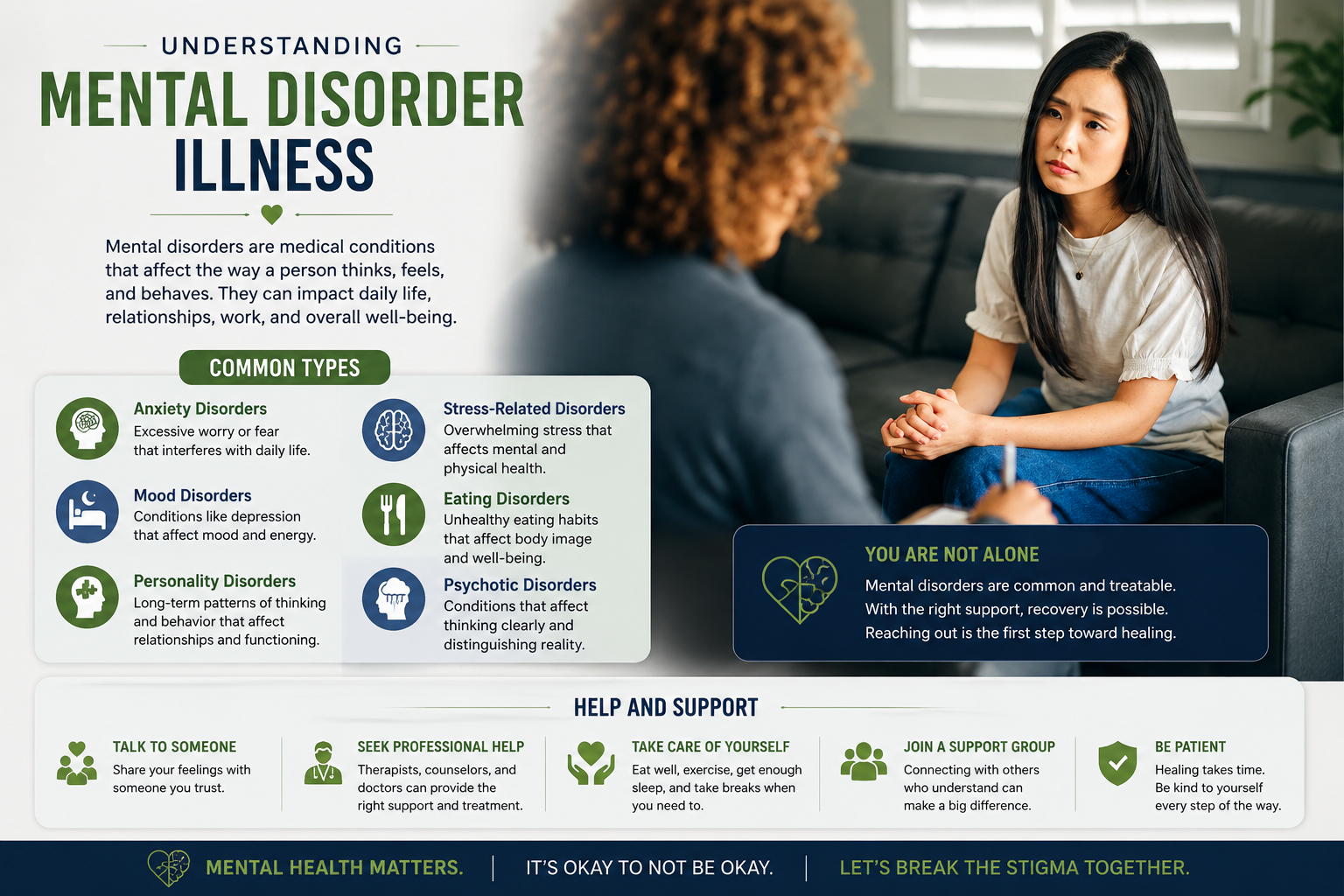
Mental disorder illness moves millions of people universal, nevertheless of stage, gender, nation, or contextual. While alertness of mental health has grown up meaningly over the past era, delusions and disgrace still prevent several individuals from looking for the benefit they necessity. Mental disorders are physical therapeutic situations that impact a person’s opinions, emotion, and capability to purpose in daily life.
Existing with a mental disorder can be stimulating, but early analysis, operative conduct, and strong communal care can significantly progress superiority of life. Empathetic the reasons, indicators, and obtainable conducts is a significant stage near reducing stigma and encouraging recovery.
In this complete director, you’ll acquire what mental disorder illness is, its common kinds, cautionary symbols, reasons, analysis, conduct choices, prevention approaches, and applied instructions for preserving good mental health.
What is mental disorder illness?
Mental disorder illness, also called mental health disorder, mentions to an extensive variety of situations that distress a person’s sensitive, emotional, and behavioral functioning. These situations can impact how someone reflects, senses, narrates to others, grips anxiety, and makes conclusions.
Significantly, mental illness is not a symbol of dimness or absence of determination. Similar heart disease or diabetes, mental disorders are authentic strength situations that merit appropriate analysis and conduct.
Mutual forms of mental disorder illness
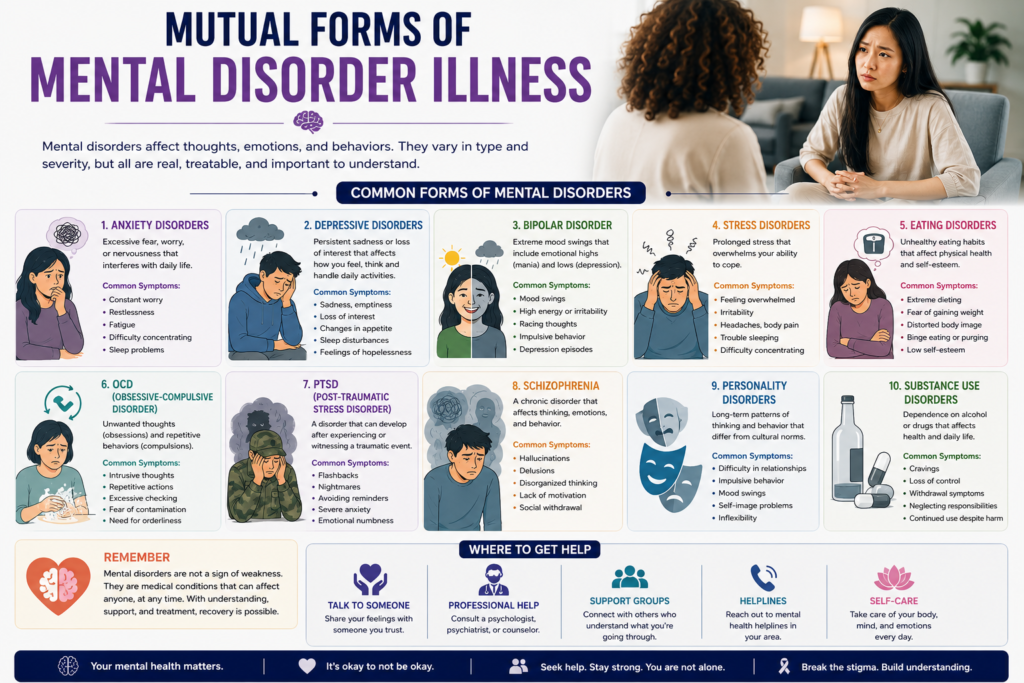
There are hundreds of documented mental health disorders. Some of the most mutual contain:
1. Concern disorders
Concern disorders contain extreme terror, concern, or anxiety that continues over time and delays with ordinary actions. Common instances contain:
a) Widespread concern disorder
b) Terror disorder
c) Social concern disorder
d) Exact terrors
Indications often contain:
a) Constant apprehension
b) Impatience
c) Quick heartbeat
d) Hidrosis
e) Struggle concentrating
f) Distress napping
2. Despair
Despair, also known as main miserable disorder, is more than basically sense gloomy. It touches temper, inspiration, vigor, and complete operational. Common indicators contain:
a) Insistent dejection
b) Loss of attention in diversions
c) Exhaustion
d) Spirits of desperateness
e) Vagaries in craving
f) Nap turbulences
g) Difficulty absorbed
h) Opinions of self-harm or self-destruction
3. Bipolar disorder
Bipolar disorder grounds rare moves in temper, vigor, and activity levels. Individual involvement incidents of:
a) Obsession or hypomania (tremendously raised temper)
b) Despair (extreme desolation and low vigor)
c) Conduct frequently contains medication united with psychotherapy.
4. Obsessive-Compulsive Disorder
OCD is categorized by intrusive opinions (obsessions) and dull actions (obligations). Sample contain:
a) Frequent hand-washing
b) Inspection manes frequently
c) Enumeration services
d) Establishing things excessively
5.Post-traumatic anxiety disorder
PTSD progresses after suffering or observing shocking measure. Indicator contain:
a) Recurrences
b) Dreams
c) Evading prompts of trauma
d) Sensitive impassiveness
e) Hypervigilance
6. Consumption disorders
Consumption disorders affect consumption actions, body image, and corporeal strength. Mutual methods contain:
a) Anorexia nervosa
b) Bulimia nervosa
c) Bender consumption disorder
Without conduct, consumption disorders can convert life intimidating.
7. Schizophrenia
Schizophrenia is a serious psychiatric disorder that affects thoughtful, excitements, and observation. Indicators may contain:
a) Hallucinations
b) Misapprehensions
c) Confused talking
d) Compact sensitive appearance
e) Social extraction
With suitable conduct, many individuals with schizophrenia can achieve their indicators efficiently.
Indicators of mental disorder illness
Indicators vary depending on the precise illness but usually contain:
a) Determined dejection
b) Concern or unnecessary terror
c) Temper swipes
d) Touchiness
e) Exhaustion
f) Lack of inspiration
g) Difficulty absorbed
h) Nap difficulties
i) Changes in appetite
j) Community separation
k) Spirits of guilt or insignificance
l) Difficulty handling everyday tasks
m) Augmented spirits or drug use
Sources of mental disorder illness
Mental disorders are frequently produced by an amalgamation of biological, psychological, and environmental features.
Biological features
a) Hereditary tendency
b) Intelligence interaction inequities
c) Hormonal changes
d) Nervous disorders
Psychological features
a) Childhood suffering
b) Sensitive exploitation
c) Chronic stress
d) Short self-confidence
e) Heartache or damage
Ecological features
a) Domestic battle
b) Workplace pressure
c) Communal separation
d) Harassment
e) Contact to ferocity
Existence features
a) Deprived sustenance
b) Lack of corporal action
c) Nap deficiency
d) Material misappropriation
e) Long-lasting strain
Greatest mental illnesses progress due to manifold interrelating features rather than one single reason.
Hazard features
Certain features upsurge the probability of emerging a mental illness, counting:
a) Domestic antiquity of mental illness
b) continuing therapeutic situations
c) Disturbing involvements
d) Material misuse
e) Long-term pressure
f) Nonexistence of social provision
h) Youthful abandonment or exploitation
Having these hazard features does not nasty someone will absolutely progress a mental illness, but it upsurges susceptibility.
How mental disorders are diagnosed
Diagnosis is performed by experienced healthcare professionals such as psychiatrist,
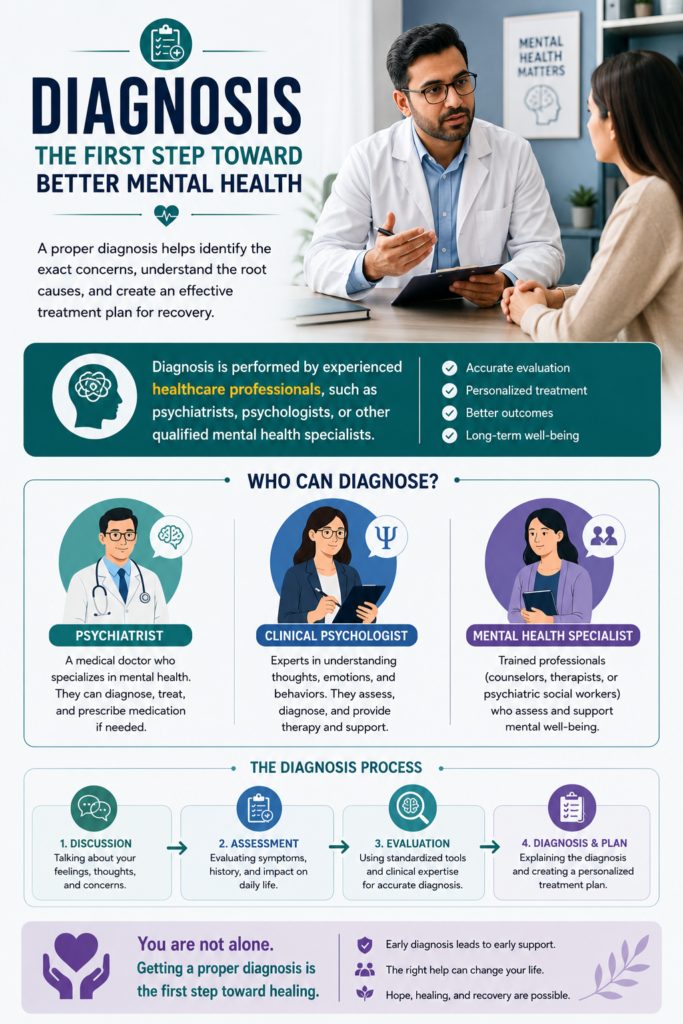
psychologists, or other mental health specialists. The estimation may contain:
a) Therapeutic record
b) Rational physical condition conference
c) Mental questionnaires
d) Corporal inspection
e) Laboratory tests to statute out medical situation
Early diagnosis allows conduct to begin before symptoms turn into harsher.
Conduct options for mental disorder illness
Treatment depends on the exact analysis and brutality of symptoms.
Psychoanalysis
Psychoanalysis, or talk therapy, helps individuals appreciate and handle their emotions,
behaviors, and thinking patterns. Frequent approaches contain:
a)Cognitive behavioral treatment (CBT)
b) Dialectical actions treatment (DAT)
c) Interpersonal treatment (IPT)
d) Relations treatment
Prescription
Healthcare providers may prescribe medications such as:
a) Antidepressants
b) Anti-anxiety medication
c) Temper stabilizers
d) Antipsychotic medication
Prescription should always be taken precisely as prescribed and monitored by a healthcare expert.
Existence changes
Healthy daily lifestyle support revival and recover expressive well-being. Supportive practices contain:
a) Usual work out
b) Balanced diet
c) Quality nap
d) Anxiety administration
e) Restraining alcohol
f) Avoiding leisure drugs
Can mental disorder illness be prohibited?
Not every mental disorder can be prohibited, but vigorous lifestyle may inferior the hazard.
Observe pressure organization
Be trained well coping strategies such as:
a) Consideration
b) Deep inhalation
c) Yoga
d) Journaling
e) Time organization
Mental health and day by day life
Mental disorder illness affects many aspects of day by day life, counting:
a) Occupation presentation
b) Educational sensation
c) Relatives dealings
d) Friendships
e) Economic immovability
f) Corporeal strength
However, many people productively control their situation through conduct, healthy routines, and continuing support.
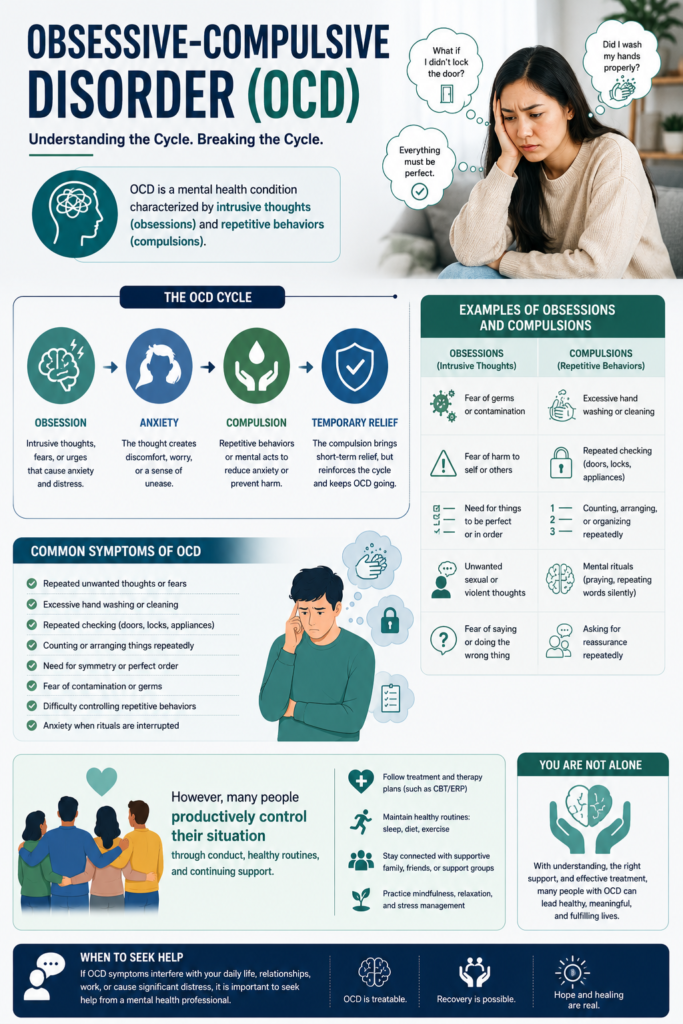
When should you look for specialized assist?
Discuss with a mental health expert if symptoms
a)Persevere for more than two weeks
b) Obstruct with exertion or discipline
c) Influence interaction
d) Reason severe affecting suffering
e) Lead to essence mistreatment
f) Comprise feelings of self-harm or suicide
Early intercession often improves recuperation and long-term outcomes.
Termination
Mental disorder illness is a general but often misunderstood faction of medical situation that concern opinion, emotions, and actions. From concern and despair to bipolar disorder and schizophrenia, this illness can extensively contact day by day life but they are also treatable.
Recognize the early caution symbols, considerate the prospective causes and seeking timely specialized care can make a important diversity. Treatment may contain psychoanalysis, prescription, fit lifestyle changes, and support from relations, friends, or society groups.
Most highly, keep in mind that mental illness does not describe a person’s personality or potential. With the right concern and support, many individuals improve or productively control their symptoms, leading healthy, significant, and creative life. Prioritizing mental health, sinking disgrace, and encourage open conversations are necessary steps toward structure recovered individuals and stronger communities.